Two owners. Same size property — two-bedroom, two-bath. Similar renovation quality. Similar listing photos. One in Clearwater Beach, earning $58,000 a year. One in Brandon, earning $21,000. Both managed professionally. The difference isn’t luck. It isn’t even management. It’s location — and what that location means for the type of traveler it attracts, the events it’s proximate to, and the nightly rate it can credibly command.
Tampa Bay’s short-term rental market has grown 77% in active listings over the past year — yet revenue and nightly rates held or improved across the same period. That means demand is genuinely expanding. But it also means that not all neighborhoods are expanding equally. Some are absorbing new supply without any pressure on rates. Others are showing early signs of dilution as undifferentiated listings compete for the same guests.
What follows is our 2026 neighborhood-by-neighborhood breakdown — where we manage properties, where we see the strongest performance, and where the data points toward opportunity or caution.
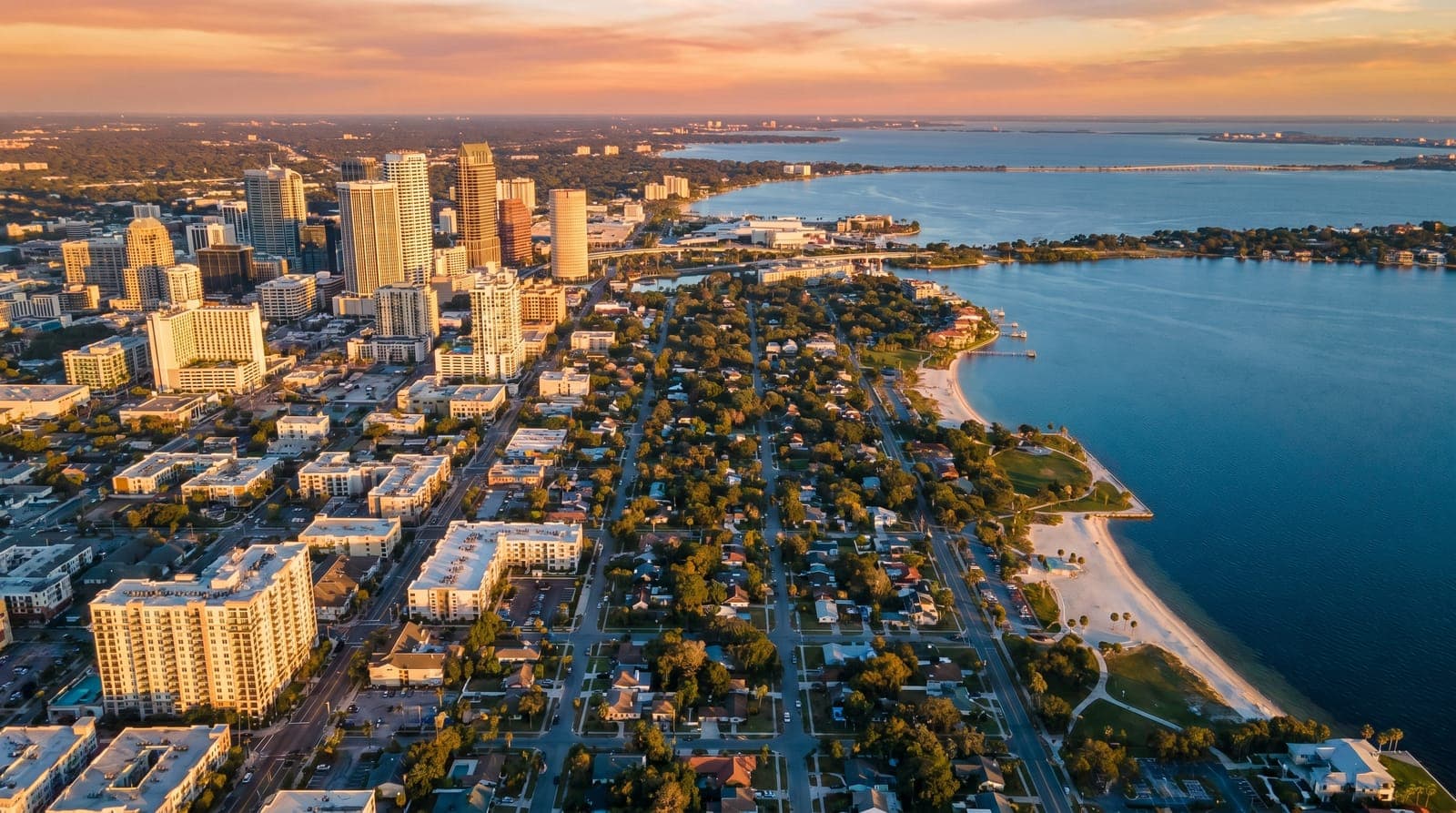
Hillsborough County
The Hillsborough market is driven by events and corporate demand more than beach tourism. That makes it more resilient seasonally — but it also requires more active calendar management to capture the peaks.
Channel District & Downtown Tampa
Top Pick — Event DemandThe strongest event-driven neighborhood in the Tampa Bay market. The Channel District sits minutes from the cruise terminal, Amalie Arena, the Tampa Convention Center, Sparkman Wharf, and the Riverwalk — a concentration of demand drivers that no other neighborhood in the metro matches. Carnival Paradise, Royal Caribbean, and Norwegian depart from here multiple times weekly, generating pre- and post-cruise overnight demand that is predictable, repeatable, and largely invisible to self-managing owners who don’t track the port schedule.
Lightning playoff runs, Buccaneers home weekends, and the 540+ annual conventions that overflow hotel inventory all land directly in this neighborhood’s booking calendar. A well-optimized one- or two-bedroom condo here routinely achieves $185–$240 per night on average, with event-weekend rates spiking to $350–$500 when demand is properly captured.
Best for
1–2BR condos
Guest profile
Cruise, events, corporate
Peak months
Mar, Oct–Nov, playoffs
South Tampa, Hyde Park & Bayshore
Top Pick — Premium DemandSouth Tampa is the highest-tier residential market in the county — and it translates directly into Airbnb pricing power. Hyde Park’s walkable Village, Bayshore Boulevard, and the proximity to Tampa General Hospital and the University of Tampa create a guest mix that almost no other market replicates: corporate travelers, medical professionals on extended assignment, wedding guests, and leisure visitors who want a neighborhood rather than a hotel corridor. The median home price in Hyde Park exceeds $650,000, which sets a natural quality floor for the listings that operate here.
Revenue on a well-managed two-bedroom here regularly lands between $42,000 and $55,000 annually — above the Tampa market average by a meaningful margin, driven by a combination of premium nightly rates ($195–$280) and strong mid-week corporate occupancy that purely leisure-focused markets don’t generate.
Best for
Bungalows, 2BR luxury
Guest profile
Corporate, leisure couples
Peak months
Year-round (low seasonality)
Ybor City
Best Entry PointYbor City is the most undervalued neighborhood in the Tampa Airbnb market from an entry-price perspective. With a median property price around $387,800 — significantly below Hyde Park and South Tampa — it offers one of the strongest price-to-income ratios in the county. The neighborhood draws a distinct guest profile: younger travelers, weekend visitors, and event-goers drawn by the Historic Latin Quarter’s nightlife, the Columbia Restaurant, Centro Ybor, and the city’s most concentrated calendar of cultural events.
Gasparilla, St. Patrick’s Day (one of Florida’s largest), Guavaween, and the regular event programming along 7th Avenue create booking spikes throughout the year that reward owners who track the event calendar. Two-bedroom properties produce the best returns here — typically $28,000–$38,000 annually with active management.
Best for
2BR historic homes
Guest profile
Younger travelers, events
Peak months
Jan (Gasparilla), Mar, Oct
Seminole Heights
Rising MarketSeminole Heights has moved from “up-and-coming” to “established alternative” over the past three years. The neighborhood’s concentration of craft breweries, independent restaurants, and mid-century architecture has created a guest profile that actively prefers it over the more polished South Tampa corridor — specifically, the type of traveler who searches “local neighborhood feel” rather than “downtown proximity.”
Entry prices are accessible ($300K–$450K for a well-renovated bungalow), and the nightly rate ceiling is lower than South Tampa or Channel District. But the guest experience story — the walkable brewery trail, the eclectic restaurants, the neighborhood character — is genuinely differentiated and easier to market than a generic condo. Annual revenue typically lands in the $24,000–$33,000 range for a two-bedroom.
Best for
Bungalows, craftsman homes
Guest profile
Foodies, weekend explorers
Peak months
Mar–May, Oct–Nov
Pinellas County
Pinellas is the beach market. The Gulf Coast barrier islands — from Clearwater Beach in the north to St. Pete Beach in the south — consistently produce the highest nightly rates and occupancy figures in the Tampa Bay metro. The tradeoff is stronger seasonality: the peak runs roughly November through April, with summer performing well but at meaningfully lower rates than the snowbird season.
Clearwater Beach
Top Pick — Highest ADRClearwater Beach is the highest-performing vacation rental market in Tampa Bay by average nightly rate. Consistently ranked among TripAdvisor’s top U.S. beaches, it attracts a premium leisure guest who plans ahead, books longer stays, and has a higher tolerance for above-market rates. The result is an average daily rate of $249–$266 and occupancy that runs 64–73% across the full year — a combination that produces annual gross income of $40,000–$65,000 for a well-managed two-bedroom.
Peak season (February through April) is where the real numbers are made. Spring break, the Clearwater Jazz Holiday in October, and the snowbird corridor’s November–March residency create a demand calendar that rewards proactive pricing management. The shoulder months (June–September) require more active work to maintain occupancy — and this is precisely where professional management earns its fee, holding 55–65% occupancy when self-managed listings fall to 35–40%.
ADR
$249–$266/night
Occupancy
64–73%
Annual gross
$40K–$65K
St. Pete Beach, Treasure Island & Madeira Beach
Top Pick — Best Price-to-IncomeThe southern barrier island corridor — St. Pete Beach, Treasure Island, and Madeira Beach — is the most efficient segment of the Pinellas vacation rental market from a pure return-on-investment standpoint. Entry prices are generally 15–25% below Clearwater Beach, yet annual gross income is within striking distance: St. Pete Beach vacation rentals produce $35,000–$40,000 annually at 65–75% occupancy.
The guest profile here is slightly different from Clearwater Beach — more family-oriented, more repeat visitors, a stronger snowbird base that books November through April in multi-week blocks. That repeat-guest dynamic is valuable: it fills the calendar at the edges of the season with guests who return year after year, reducing the marketing effort required to maintain high occupancy. Madeira Beach and Treasure Island specifically attract guests who prioritize quiet waterfront access over the dining and entertainment density of Clearwater Beach.
Annual gross
$35K–$40K
Occupancy
65–75%
Guest profile
Families, snowbirds
St. Petersburg
Most Diverse DemandSt. Petersburg is the most culturally distinct market in Tampa Bay — and that distinctiveness is a genuine competitive advantage for the right property. The Dali Museum, the arts district along Central Avenue, the growing LGBTQ+ destination profile, and the waterfront dining scene at the St. Pete Pier draw visitors who are specifically seeking St. Pete, not just any Florida beach. That brand loyalty produces a booking pattern that is less dependent on pure sun-and-sand seasonality than Clearwater or St. Pete Beach.
Average metrics: ADR of $179–$264 and occupancy ranging from 45–61% across the market, producing average annual revenue of approximately $21,300 for a typical listing. But the top quartile — properties in the historic Kenwood, Crescent Lake, or Downtown St. Pete neighborhoods with strong listing differentiation — routinely outperforms that average by 60–80%. St. Pete rewards character. A renovated 1920s bungalow with a distinct interior and walkable location will outperform a generic condo at the same price point.
ADR
$179–$264/night
Occupancy
45–61%
Best for
Historic bungalows, lofts
Dunedin
Hidden OpportunityDunedin is the most under-the-radar market in this guide. Its walkable downtown with the highest concentration of craft breweries per capita in Florida, direct access to the Pinellas Trail, and the gateway position to Honeymoon Island State Park create a guest appeal that is completely distinct from the beach corridor markets to the south.
Supply remains significantly lower than Clearwater Beach — which means well-positioned properties face less competition for the guests who are specifically searching Dunedin. The Blue Jays spring training residency adds a predictable demand spike each February and March that is easy to monetize with advance pricing. Annual revenue for a managed two-bedroom typically runs $27,000–$36,000, with a favorable price-to-income ratio relative to acquisition cost.
Best for
Cottages, smaller homes
Guest profile
Outdoor, brewery, spring training
Peak months
Feb–Apr, Oct–Nov
The Number That Changes the Calculation in Every Neighborhood
The neighborhood benchmarks above reflect market averages — which blend the top-performing properties with the ones nobody is quite managing correctly. The spread within each neighborhood is often larger than the spread between neighborhoods.
In the Tampa Bay STR data, the top 10% of properties earn $6,266 or more per month. The median earns $2,215. That gap — $48,000 per year difference on the same market, in the same neighborhoods — is not explained by location. It’s explained by the quality of management: dynamic pricing that captures event peaks, listing optimization that earns clicks and conversions, review quality that improves algorithm placement, and 24/7 response that books last-minute stays that would otherwise go to a competitor.
Every neighborhood in this guide has both top-quartile performers and bottom-quartile performers. The difference between them is not random — and it’s not luck. It’s the operational gap that widens every year as the market matures and as guests’ expectations for the quality of their experience continue to rise.
If you’re evaluating a property in any of these markets — or trying to understand why your existing property isn’t tracking the numbers the market data suggests it should — a free revenue estimate based on your specific property and location is the most direct way to see where you stand.
Frequently Asked Questions
What is the best neighborhood for Airbnb in Tampa Bay?
It depends on your investment goals. For highest ADR, Clearwater Beach leads at $249–$266/night with 64–73% occupancy. For year-round demand stability with low seasonality, South Tampa and Downtown Tampa outperform. For lowest entry price with strong ROI, Ybor City and Seminole Heights offer compelling numbers. Most investors in the $400K–$700K range find that South Tampa, Channel District, or Clearwater Beach produce the best risk-adjusted returns.
How much can I earn on Airbnb in Clearwater Beach?
Clearwater Beach vacation rentals average $249–$266/night with 64–73% occupancy, producing $40,000–$65,000 in annual gross income for a well-managed two-bedroom. Professionally managed properties consistently outperform this by 30–40%. Peak months are February through April. Shoulder-month performance (May–October) is where the gap between managed and self-managed listings is most visible.
Is St. Pete Beach a good Airbnb market?
Yes. St. Pete Beach vacation rentals produce $35,000–$40,000 annually at 65–75% occupancy — one of the most consistently occupied markets in Pinellas County. Entry prices are slightly below Clearwater Beach, giving investors a favorable price-to-income ratio. The barrier island corridor (St. Pete Beach, Treasure Island, Madeira Beach) attracts loyal repeat guests and a strong snowbird base.
What property type performs best for Airbnb in Tampa Bay?
In urban Tampa neighborhoods, 1–2BR condos perform best, attracting corporate travelers and convention guests. In Pinellas beach markets, 2–4BR homes outperform because families and groups stay longer. Hyde Park and Seminole Heights favor renovated bungalows with distinctive character that guests actively search for.
Does professional management make a difference in Tampa Bay?
Significantly. The performance gap between self-managed and professionally managed properties in Tampa Bay averages 35–50% in annual gross revenue. In Channel District and Downtown Tampa — where cruise days, Lightning playoffs, and convention weeks require active calendar management — the gap can exceed $15,000 annually on a single well-located property.
Owner, Emperor Rentals. Short-term rental operator and manager in the Tampa Bay area since 2019. Manages vacation rental properties across Hillsborough and Pinellas counties.