There’s a version of St. Petersburg, Florida that still lives in the minds of people who haven’t visited recently. Snowbird territory. Retirement condos. A bridge you cross to get to Clearwater Beach. That version of St. Pete stopped existing somewhere around 2019 and the gap between that perception and the reality keeps growing.
The city that exists today has a James Beard Award-nominated restaurant scene, a Michelin-recognized museum, the #1 beach in the United States twenty minutes from downtown, and as of this spring, a nationally ranked art institution that just committed $65 million to becoming significantly larger, more immersive, and more internationally recognized than it already is.
For short-term rental owners in St. Petersburg and across Pinellas County, this matters. Not in an abstract “great for the city” way — in a direct, measurable “your booking calendar is affected by this” way. Let’s talk about why.
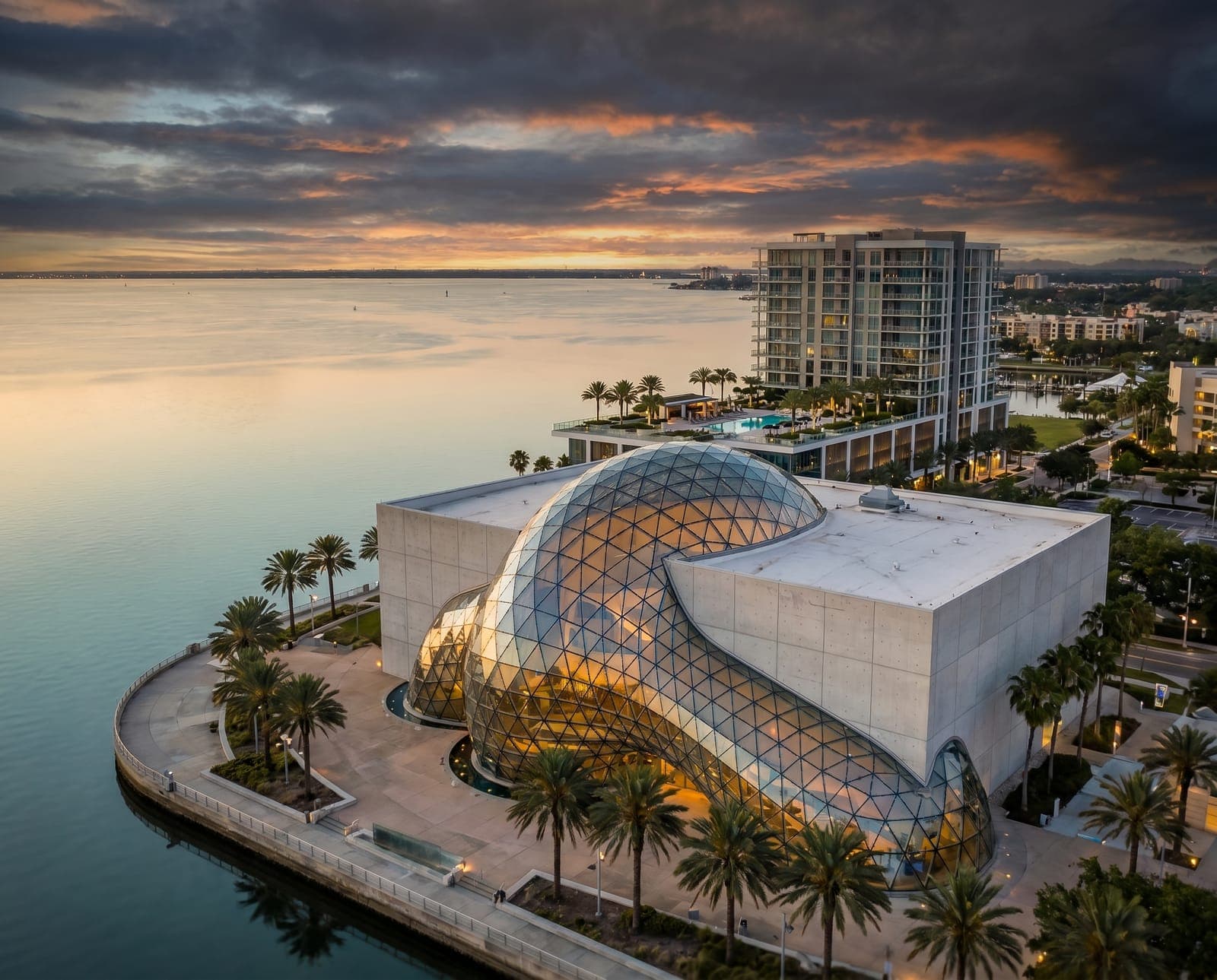
What Actually Happened — and Why It’s Bigger Than It Sounds
Two things came together in a short window of time. First, USA Today’s 10Best readers’ poll ranked the Salvador Dalí Museum the No. 5 Best Art Museum in the United States. Not in Florida. Not in the Southeast. In the country — ahead of institutions with larger endowments, larger cities, and decades more name recognition.
This isn’t the museum’s first national recognition, but the timing of it matters. The Dalí has been on an upward trajectory in both the travel press and the academic museum world:
- —
Three-star rating from the Michelin Guide — the highest possible designation
- —
Named one of seven museums globally that showcase the future of the museum experience by CNN Travel
- —
Listed as one of the 10 most architecturally interesting museums in the world by Architectural Digest
- —
Now: Top 5 Art Museum in America, USA Today 10Best
Then, weeks later, came the expansion announcement: a $65 million addition to the existing building at 1 Dalí Boulevard in downtown St. Pete. Approximately 35,000 square feet of new space. Construction starting fall 2026. Opening: September 2028.
The museum isn’t sitting on its recognition. It’s doubling down on it.
What the Expansion Actually Adds
This isn’t a renovation. It’s a structural expansion of the museum’s capacity and identity. Three things in particular stand out from an tourism demand perspective:
Flexible immersive galleries
The new wing will feature gallery environments specifically designed for technology-integrated, experiential exhibitions — the kind of immersive format that has driven record attendance at institutions like teamLab in Tokyo, the Van Gogh Experience in New York, and the Atelier des Lumières in Paris. These formats attract visitors who wouldn't traditionally describe themselves as "museum people" — younger demographics, couples, groups. They also drive repeat visits, because the content rotates. One visit to a Dalí immersive exhibition leads to a second trip for a different exhibition.
A dedicated learning center
The expansion includes a purpose-built learning center serving K–12 students and adult education programs. This is a structural driver of group travel — school trips, educational tours, adult programs — that generates multi-night stays for visiting groups and traveling families. Groups traveling specifically for educational programming tend to stay longer and spend more per visit than general tourists. A well-managed vacation rental within 20 minutes of the museum becomes a legitimate accommodation option for traveling families and small groups.
Expanded community event spaces
Larger event capacity means more private events, corporate functions, and cultural programming anchored at the museum. Events of that type reliably fill hotel rooms and STR inventory in the surrounding area. The Dalí's expansion essentially creates a new category of overnight visitor that doesn't exist at current scale — the event attendee who is in St. Pete specifically for a Dalí-hosted program.
The City This Is Landing In
The Dalí expansion doesn’t exist in isolation. It’s landing in a St. Petersburg that is in the middle of one of the most significant urban transformations in its history.
The Historic Gas Plant District — the site of the old Tropicana Field, just blocks from the museum — is undergoing a $6.5 billion redevelopmentthat will add a new stadium, hotels, residential towers, retail, and green space to the downtown core. When complete, it will be one of the largest mixed-use developments in Florida history. St. Pete’s hotel inventory near the waterfront is already capacity-constrained, and that redevelopment isn’t adding enough hotel rooms to absorb projected demand growth.
Meanwhile, Clearwater Beach continues to draw international attention as the #1 beach in the United States (Travel + Leisure readers, second consecutive year). That recognition generates overflow accommodation demand across the entire Pinellas peninsula — visitors who want the beach experience but are priced out of Clearwater beachfront or simply prefer the walkable, neighborhood character of St. Pete.
Add the Dalí Museum’s national ranking and the expansion announcement, and you have a city that is simultaneously being written about in travel media, being chosen by cultural travelers, being built out with new attractions, and running short on hotel beds.
That combination has a name in real estate: an undersupplied market in an ascending destination. For vacation rental owners, it means the fundamentals are pointing in one direction.
The Neighborhoods That Benefit — and How to Think About Proximity
Not every Pinellas property benefits equally, but the radius of impact is wider than most owners assume. Here’s how to think about it:
0–1 mile: Old Northeast, Downtown St. Pete, Bayshore Drive
Walking distance from the museum. These properties are the clearest beneficiaries — guests who plan a trip specifically around the Dalí can wake up, walk to coffee on Beach Drive, spend the morning at the museum, and be back at the property in ten minutes. For cultural travelers and couples, this kind of walkability is a booking decision, not an afterthought.
1–3 miles: The Edge District, Grand Central, Kenwood, Crescent Lake
These are the neighborhoods that attract guests who want character — a local coffee shop, a weekend farmers market, walkable dining on Central Avenue. They're within a short drive or rideshare from the museum and offer the kind of residential authenticity that boutique hotel guests have been migrating toward. Vacation rentals with strong positioning in these areas are already competitive; add Dalí proximity as a specific listing feature and the search performance improves.
3–8 miles: Gulfport, South Pasadena, Treasure Island
These markets have their own draw — beach access, waterfront, lower price points for families. Guests here are likely combining a beach trip with a Dalí visit as one itinerary item among several. Worth noting in listing descriptions as a day-trip anchor, not a primary feature. The bigger opportunity here is the extended stay: a guest who might stay two nights in Clearwater stays three in St. Pete because there's more to do.
The Guest Profile the Dalí Attracts — And Why It’s Good for Your Revenue
Not all tourist demand is equal. The type of visitor a destination attracts determines what they spend, how long they stay, and what review they leave. The Dalí Museum attracts a guest profile that is, frankly, one of the most desirable in the short-term rental market.
Cultural travelers — people who plan trips around museums, art experiences, and architecture — consistently rank above average on every metric that matters for vacation rental performance:
- —
Longer average length of stay (art-focused trips tend to be 3–5 nights vs. 2 for beach-only trips)
- —
Lower incident rate — cultural travelers are statistically lower-risk guests than bachelorette groups and spring break visitors
- —
Higher review quality — guests who are engaged with the destination leave more thoughtful, detailed positive reviews
- —
Off-peak demand — museums draw visitors year-round, not just in summer, which helps flatten the seasonal curve for owners nearby
- —
International visitors — the Dalí's global reputation means a meaningful share of its visitors fly in from Europe and Latin America, and they need 3–7 nights of accommodation
A vacation rental property that is credibly positioned as a cultural travel base — near the Dalí, near Beach Drive, near the marina and the Museum of Fine Arts — attracts a guest who is likely to stay longer, treat the property better, and write a better review than a generic tourist booking. That compounds over time into a listing with higher conversion, better ranking, and a guest base that sends referrals.
The Two Years Before Opening Matter More Than the Opening Itself
The Dalí expansion opens in September 2028. That might seem like it’s far enough away that owners can wait before acting on it. That reasoning is exactly backwards.
Here’s how demand actually builds around a high-profile museum expansion:
Phase 1 — The announcement coverage (now): Travel media, art publications, and architecture outlets cover the expansion announcement. The Dalí gets written about in publications that normally only cover Paris, New York, and London. Travelers who had the museum on their “maybe someday” list start booking. Visits increase as people want to see the museum before it changes. Listings that mention the expansion as context — “the museum is about to get significantly bigger” — are already capturing a wave of interest-driven searches.
Phase 2 — Construction visibility (fall 2026–2028): A construction crane next to a beloved institution generates its own media cycle. Locals document it. Travel bloggers mention the expansion timeline. The museum becomes a story, not just a destination. Visitors who come during this period often become early-adopter visitors for the opening — they book again for the 2028 opening specifically.
Phase 3 — Pre-opening buzz (early 2028): The months before a major museum opening generate intense coverage. International press, architecture reviews, travel features. The opening-week demand spike for a $65 million museum expansion at a nationally recognized institution will be significant. The STR properties within walking distance of the museum will be competing for a pool of demand that doesn’t exist at current scale.
Phase 4 — Post-opening sustained demand (late 2028+): The ongoing elevated visitor baseline. More square footage means more programming, more blockbuster traveling exhibitions, more reasons to come back. Institutions that expand well don’t just have a bump — they reset at a higher steady state.
The owners who benefit most from Phase 3 and 4 are the ones who are positioned in Phase 1. That window is open right now.
What Proactive Positioning Looks Like in Practice
We’ll be specific. Here’s what acting on this looks like for a St. Pete vacation rental owner right now:
Update your listing to mention the Dalí — specifically
"Near downtown St. Pete" is fine. "Walking distance from the Salvador Dalí Museum — recently named the No. 5 Best Art Museum in the United States" is a reason to book. The same property, described with specific cultural anchors, attracts a measurably different guest profile than one described with generic proximity language. Most listings won't make this update for months, if at all. The head start is available right now.
Build a pricing plan for expansion milestones
Construction start (fall 2026), opening announcement (early 2028), and opening week (September 2028) are all bookable demand events. A manager who is tracking the Dalí timeline builds price floors and minimum stay requirements weeks in advance for those windows — not the day before when every competitor is also reacting. The spread between proactive pricing and reactive pricing on a major demand event can be $50–$150 per night.
Position the property around the cultural identity of St. Pete, not just the beach
The guests who are coming to St. Pete for the Dalí, the museum district, Beach Drive, and the culinary scene are different from the guests who are coming purely for Clearwater Beach. Both are valuable. But they search differently, they book differently, and they respond to different listing language. A property that speaks to cultural travelers as its primary audience — and mentions the beach as a bonus — will attract a mix that's more favorable on length of stay and incident rate.
Add the expansion timeline to your guest welcome materials
A guest who arrives during construction and is told "the museum is about to double in size — here's what's being added" leaves feeling like they got inside information. That's the kind of detail that shows up in reviews: "The hosts knew everything about what was happening in the neighborhood." It converts to five stars and return bookings.
The Broader Tampa Bay Picture — Why This Matters Beyond St. Pete
One thing worth noting for owners across the wider Tampa Bay area: the Dalí expansion is one of several simultaneous demand drivers that are reshaping this entire market.
On the Tampa side of the bay: Tampa WOW! — a 250-foot observation wheel just cleared its environmental permit and begins construction this summer. Port Tampa Bay is building a fourth cruise terminal. The $134.48 million in taxable hotel revenue recorded in March 2026 was a single-month record for Hillsborough County.
On the Pinellas side: the Dalí expansion, the Tropicana Field redevelopment, Clearwater Beach holding its national ranking, and a short-term rental market that is meaningfully undersupplied relative to projected demand.
The owners who are paying attention to this pipeline — and positioning their properties to reflect it — are not chasing demand after it arrives. They’re building the listing history, the review volume, and the search ranking to capture it when it peaks.
Tampa Bay is not a market where you can afford to be six months behind. The properties that are positioned now will have momentum that late movers simply can’t buy back.
Frequently Asked Questions
What is the Dalí Museum expansion in St. Petersburg?
The Salvador Dalí Museum announced a $65 million expansion adding approximately 35,000 square feet to its downtown St. Pete location. The project includes flexible immersive gallery spaces, a new learning center for K–12 and adult programs, and expanded community event venues. Construction begins fall 2026 and the new wing opens September 2028. The museum remains open throughout construction.
How will the Dalí Museum expansion affect Airbnb demand in St. Pete?
Museum expansions of this scale — especially at nationally ranked institutions — consistently increase overnight visitor demand in surrounding areas. The immersive gallery format attracts cultural travelers who stay longer than beach-only visitors. St. Pete's hotel inventory near the waterfront is already constrained, which channels overflow toward short-term rentals. Properties within 2 miles of the museum are most directly positioned.
Which St. Pete neighborhoods are closest to the Dalí Museum?
The Old Northeast, Downtown St. Pete, and the Beach Drive corridor are closest — walking distance from 1 Dalí Boulevard. The Edge District, Grand Central, and Kenwood are 10–20 minutes away and attract guests seeking a walkable neighborhood experience with easy museum access. All of these areas can credibly use Dalí proximity as a listing feature.
Is St. Petersburg a good market for vacation rental investment in 2026?
St. Pete is one of the strongest STR sub-markets in Florida. Clearwater Beach is the #1 beach in the U.S. for the second consecutive year, driving cross-market demand. The Dalí expansion, Tropicana Field redevelopment, and constrained hotel supply create compounding demand drivers. Properties in the cultural and waterfront corridors consistently outperform metro-wide averages.
How does Emperor Rentals position properties near cultural attractions?
We incorporate the Dalí expansion timeline — and all major St. Pete demand events — into listing language, pricing calendars, and guest communication proactively. That means updating listings now to reflect Dalí proximity and national ranking, building pricing plans for the 2028 opening, and framing properties around St. Pete's identity as one of the country's top cultural destinations. We position before the market fully prices demand in, not after.
Owner, Emperor Rentals. Short-term rental operator and manager in the Tampa Bay area since 2019. Manages vacation rental properties across Hillsborough and Pinellas counties.