June is here, and with it comes the official start of Tampa Bay’s rainy season. If you own a vacation rental in the area — whether it’s a waterfront home in Clearwater Beach, a bungalow in Seminole Heights, or a condo steps from St. Pete’s Central Avenue — the weather over the next four months will directly shape your occupancy rates, your guest experience, and your bottom line.
Here’s what the data says about summer 2026, and how smart owners are already positioning their properties to take full advantage of it.
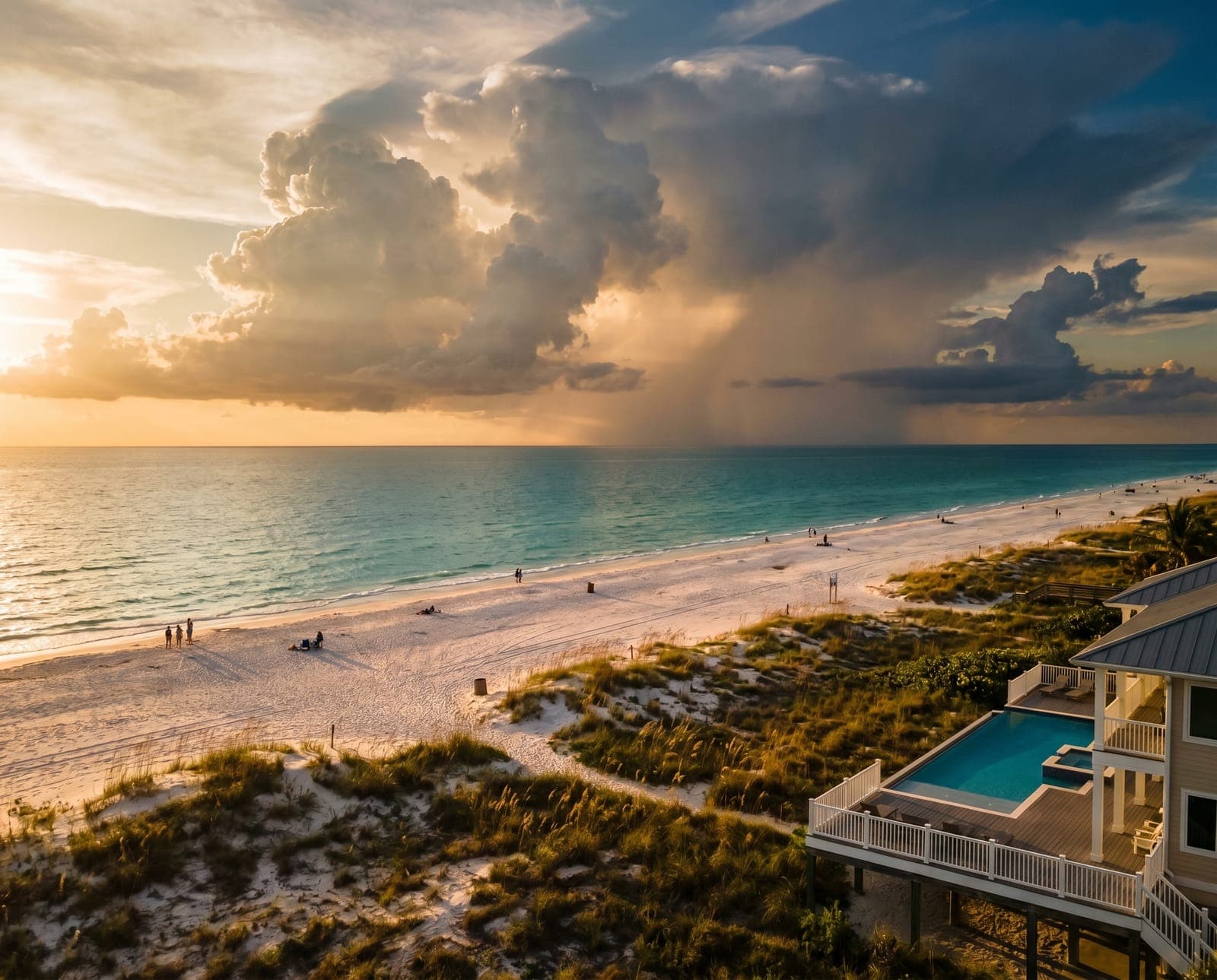
Hotter Than Normal: What the Temperature Forecast Actually Means
The NOAA seasonal outlook points to above-average temperatures across Florida this summer, with daily highs in Tampa Bay regularly hitting 32–33°C and heat index values frequently climbing to 38–43°C. This isn’t unusual for August, but NOAA’s models suggest this pattern will set in earlier than normal and persist longer.
For your guests, this means more time at the pool, the beach, and the air-conditioned comfort of your property. For you, it means your AC unit is your single most important asset this season. A unit that’s struggling to keep up in July is a one-star review waiting to happen. Schedule that service call now — every HVAC contractor in Pinellas and Hillsborough County fills up by mid-June.
The Rainy Season: Daily Storms You Can Set Your Watch By
June also flips the switch on Tampa Bay’s legendary afternoon storm cycle. Expect powerful but brief thunderstorms almost daily, typically between 2 PM and 6 PM. In a typical summer, Tampa averages more lightning strikes per square mile than almost anywhere else in the continental United States — it’s earned its unofficial title as the “Lightning Capital of America.”
These storms arrive fast, dump rain hard, and clear out within the hour. Your guests from Chicago or Toronto will be fascinated the first time. By day three, they’ll have learned to schedule their beach time for the morning.
The good news: post-storm Tampa Bay is spectacular. The air cools, the light goes golden, and the evenings become exactly the kind of outdoor experience that drives five-star reviews.
Pro tip for self-managing owners
Add a brief note to your welcome guide that explains the afternoon storm pattern. Guests who understand it aren’t surprised by it. Guests who aren’t prepared for it leave one-star reviews about “the weather.”
Rainfall Forecast: More Water, More Maintenance
Precipitation forecasts from the Climate Prediction Center call for near or above-average rainfall across Florida this summer. After a drier-than-normal start to 2026, the wet season is expected to arrive decisively.
Practically, this means your outdoor spaces — pool, patio, landscaping — will require more maintenance attention. Before peak season, check:
- —Gutters and drainage: A blocked gutter in a Florida downpour floods a patio in minutes.
- —Pool chemistry: Heavy rain dilutes chemicals and disrupts pH balance faster than usual. Weekly service isn't optional in summer.
- —Outdoor furniture anchoring: Afternoon storms can reach 40–50 mph gusts. Unsecured cushions and lightweight chairs become flying debris.
- —Landscaping: Overgrown hedges and low-hanging branches look fine in May. By August, they're blocking drains and hitting windows.
The El Niño Factor: Why the 2026 Hurricane Season Is Forecasted Below Average
Here’s the headline every Tampa Bay vacation rental owner should be filing away: El Niño is back, and it changes the hurricane math considerably.
Meteorologists at NOAA and multiple independent forecasting centers are tracking a developing El Niño event with better than 80% probability for the 2026 summer and fall. El Niño increases upper-level wind shear over the Atlantic, which disrupts the formation and intensification of tropical storms before they can organize into meaningful threats. The result: NOAA is projecting a below-average hurricane season for 2026 — fewer named storms, fewer hurricanes, and a lower probability of major landfalls compared to the past two seasons.
This is significant for the vacation rental market. The 2024 and 2025 seasons created a measurable anxiety premium — a segment of potential guests who hesitated to book Florida properties in late summer out of storm concern. A forecasted quieter season removes a booking objection at exactly the time when summer demand should be peaking.
One important caveat
El Niño reduces overall Atlantic activity, but the Gulf of Mexico remains stubbornly warm in 2026. Any system that does form and tracks toward the Gulf can intensify rapidly. Tampa Bay’s funnel-shaped geography means we never fully relax. Seasonal prep is still non-negotiable — we just get to do it with more confidence about the season ahead.
What This Means for Your Revenue Strategy
The 2026 summer sits at the intersection of favorable weather forecasts, reduced storm anxiety, and a destination profile that is still climbing. Tampa Bay is coming off a record-breaking year for tourism — 28 million visitors, $9.4 billion in business impact, and major cultural draws like the Dalí Museum expansion and Tampa WOW! attracting new demographics. That combination rewards owners who are positioned correctly.
Positioning correctly in summer means three specific things:
- —Lead with outdoor amenities: The heat and afternoon storms reinforce why indoor-outdoor properties command a premium. Guests want shade, a pool, and strong AC. Update your listing photos to feature those assets front and center before summer bookings fill in.
- —Price dynamically, not flat: Mid-week July and August can be softer than peak spring weeks, but the market rewards properties that price dynamically rather than setting a flat summer rate. A well-managed pricing strategy can recover 15–25% in revenue versus a static approach during shoulder periods.
- —Reduce friction with a great guest guide: Explain the storm cycle, list the best morning beach windows, recommend local restaurants that turn into lively evening spots after the rain. Guests who feel prepared give better reviews — and better reviews compound into better rankings.
The Bottom Line for Summer 2026
Tampa Bay’s summer is what it always is: hot, wet, and full of potential. What makes 2026 different is the El Niño signal reducing the background anxiety of an active hurricane season, combined with a tourism market that has genuine momentum.
Owners who prepare their properties for the heat and rainfall, communicate the summer experience honestly and enthusiastically to guests, and price with discipline will come out of September in a strong position.
Owners who treat summer as a “slow season” and let their properties coast on last year’s settings will leave real money on the table during one of the more favorable forecasted summers in recent memory.
Frequently Asked Questions
Is summer a good time to rent out a vacation property in Tampa Bay?
Yes. Despite the heat and afternoon storms, Tampa Bay’s summer draws a steady stream of domestic tourists. The 2026 forecast of a below-average hurricane season — driven by El Niño — further reduces booking hesitation. Properties with pools, strong AC, and good outdoor spaces perform particularly well. See our Tampa Airbnb market overview for more context on year-round demand.
How should I prepare my Tampa vacation rental for the rainy season?
Inspect gutters and drainage, secure outdoor furniture, service your AC unit, and add a guest guide that explains Tampa's afternoon storm pattern. Daily summer storms are brief but intense — guests who understand them aren't bothered by them.
Will El Niño really reduce hurricane risk for Tampa Bay in 2026?
El Niño significantly reduces overall Atlantic hurricane activity by increasing wind shear. NOAA is forecasting a below-average season for 2026. However, the Gulf of Mexico remains warm, and rapid intensification is still possible for any system that does form. Property preparation remains essential. Read our full hurricane prep checklist for Tampa vacation rental owners.
Ready to make the most of summer 2026?
A favorable hurricane forecast and a strong tourism market create a real window of opportunity. Emperor Rentals handles the pricing, the guest communication, and the seasonal prep — so you can focus on the returns.
Get your free revenue estimate →Written by Mark Malevskis — owner of Emperor Rentals, Tampa Bay’s White-Glove Airbnb and vacation rental management company. Learn about our management services →