The short answer: yes, Tampa Bay is a genuinely strong short-term rental market. It ranks consistently among the top-performing Florida markets outside of Orlando and Miami, it has year-round demand from multiple distinct visitor segments, and its acquisition prices — while no longer cheap — remain more reasonable than comparable coastal markets.
The more useful answer: it depends on where in Tampa Bay, what kind of property, and what return you’re expecting. The difference in annual revenue between a well-chosen Clearwater Beach condo and a poorly-chosen inland property at the same price point can be $40,000–$60,000 per year. This article is for investors who want to understand that difference before they buy — not after.
Why Tampa Bay Works as a Vacation Rental Market
The foundation of any strong STR market is sustained, multi-source demand — demand that doesn’t depend on a single season, a single event, or a single type of visitor. Tampa Bay has all of that.
- —Year-round tourism with four distinct peaks: Tampa Bay draws roughly 26 million visitors annually according to Visit Tampa Bay. Those visitors don’t arrive in one season — they come for snowbird season (Jan–Mar), spring training (Feb–Mar), spring break (Mar–Apr), and summer family travel (Jun–Aug), with event-driven spikes throughout the year. That calendar structure is what separates Tampa Bay from single-season beach markets that go quiet from September through November.
- —A major international airport with no-stop access from most US cities: Tampa International Airport serves direct flights from over 80 US cities and multiple international destinations. Easy air access lowers the barrier for out-of-state visitors — and out-of-state visitors are the primary guest pool for vacation rentals. Markets that are hard to fly into see lower short-stay bookings and more price resistance.
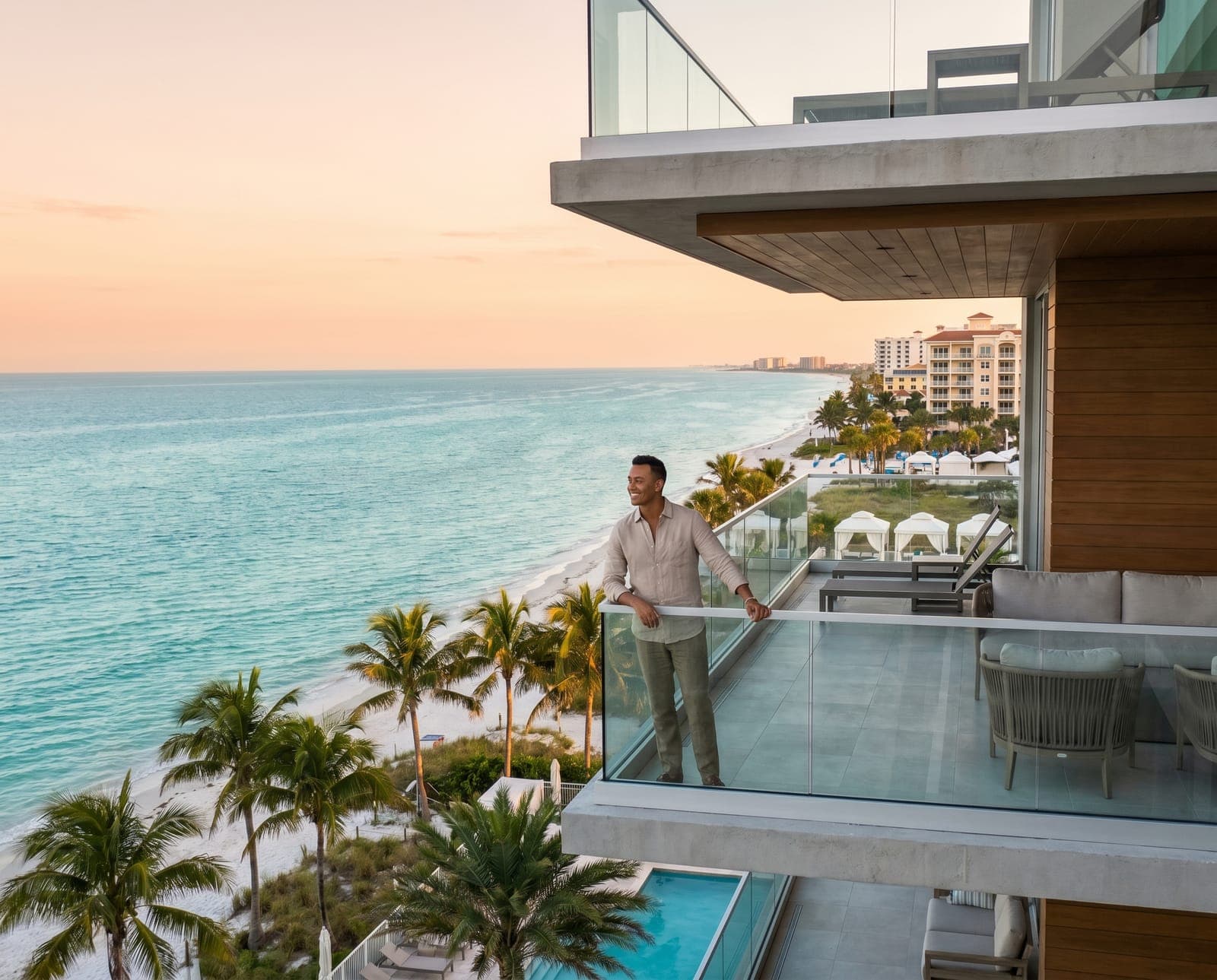
- —Beach access that most inland Florida cities don't have: Clearwater Beach, St. Pete Beach, Indian Rocks Beach, and Caladesi Island all sit within the Tampa Bay metro. Beaches aren't incidental to this market — they're the primary draw for a large share of visitors. Properties near the water command the highest rates and the most consistent year-round occupancy.
- —A dense event and sports calendar: The Buccaneers, Lightning, Rays, and Rowdies create regular home-game demand. Gasparilla, the Clearwater Jazz Holiday, Grapefruit League spring training, and the Florida State Fair all drive short-stay bookings. The event calendar is full enough that a well-positioned property can fill soft weeks around the major seasonal peaks.
- —Strong corporate and business travel demand: Tampa has a significant corporate base — financial services, healthcare, tech, defense contractors. Business travelers who extend into weekends or book short-term housing during multi-week assignments add a demand layer that purely tourist markets don't have.
What Does a Tampa Bay Vacation Rental Actually Earn?
Revenue potential varies significantly by submarket. These are realistic ranges for professionally managed properties — not best-case projections.
- —Clearwater Beach / St. Pete Beach (beachfront or near-beach): Gross annual revenue: $75,000–$130,000+ for 2–3 bedroom properties. Average Daily Rate (ADR) of $280–$480 during peak season, $160–$220 in summer shoulder. Occupancy consistently above 78% annually for well-managed listings. This is Tampa Bay's highest-performing submarket.
- —St. Petersburg (downtown / waterfront / arts district): Gross annual revenue: $55,000–$90,000 for 2–3 bedroom properties. St. Pete performs well year-round because of the diverse demand base — arts tourism, business travel, beach-adjacent vacationers, and event-driven visitors. ADR ranges from $200–$360 depending on proximity to the waterfront.
- —South Tampa / Hyde Park / Davis Islands: Gross annual revenue: $52,000–$80,000 for 2–3 bedroom properties. Strong corporate and snowbird demand. ADR of $180–$320 during peak. High occupancy in January–April, softer in summer. Properties with pools or Bayshore Boulevard access command premiums.
- —Dunedin / Safety Harbor / Tarpon Springs: Gross annual revenue: $42,000–$68,000 for 2–3 bedroom properties. Emerging markets with lower acquisition costs than beachfront Pinellas. Strong Blue Jays spring training demand in Dunedin. Good snowbird performance. Lower ADRs but also lower entry prices — cap rates can be competitive.
- —Inland Tampa (Westchase, Carrollwood, Brandon, New Tampa): Gross annual revenue: $35,000–$58,000 for 2–3 bedroom properties. Less seasonal volatility but also lower ceilings. Corporate travel and family visits drive bookings more than tourism. Works as an investment if acquisition cost is proportionally lower — but don't expect beach-market returns without beach-market proximity.
These figures assume active dynamic pricing, professional photography, and consistent five-star review performance. Self-managed properties frequently earn 20–35% less — not because the market is weaker, but because pricing, listing optimization, and guest experience are harder to maintain at scale without dedicated systems.
How Tampa Compares to Other Florida Markets
Florida has several strong STR markets, and the right one for an investor depends on budget, risk tolerance, and return expectations.
Tampa Bay vs. Orlando
Orlando has higher raw revenue potential — top-performing properties near Disney generate $100,000–$180,000+ annually. But the tradeoffs are real: supply is massive (hundreds of thousands of vacation rental units in the Kissimmee/Orlando corridor), HOA restrictions near the parks are severe and getting stricter, and the guest profile is almost entirely theme-park-driven, making demand highly dependent on Disney’s calendar and pricing. Tampa Bay has lower absolute ceilings but more defensible demand and less inventory competition in the beach submarkets.
Tampa Bay vs. Miami
Miami has the highest ADRs in Florida — $350–$700/night for premium South Beach properties during peak season. But acquisition costs are also the highest in the state, HOA fees in Miami Beach condos can be extraordinary, and the city’s STR regulations (particularly in Miami Beach) have tightened significantly in recent years. Tampa Bay offers stronger cap rates for most investors who aren’t specifically targeting the luxury segment.
Tampa Bay vs. Panama City Beach / Destin
The Panhandle beaches have beautiful white sand and strong summer demand — but they’re dramatically more seasonal. PCB and Destin slow dramatically from October through April. Tampa Bay’s snowbird market, spring training demand, and corporate travel base create a more stable year-round revenue profile that reduces the risk of a slow six-month stretch wiping out the summer gains.
The Regulatory Environment: What You Need to Know Before Buying
Short-term rentals are legal throughout most of Tampa Bay — but they require compliance with a layered set of requirements, and the rules vary by municipality. This is not a market where you can buy a property and list it on Airbnb without paperwork.
- —Florida DBPR Vacation Rental License: Any property rented more than three times per year for periods of less than 30 days requires a Florida Division of Hotels and Restaurants license. This is a state-level requirement that applies regardless of county.
- —County Business Tax Receipt: Both Hillsborough and Pinellas counties require a local business tax receipt for vacation rental operators. The fee is modest but the registration is required before operating.
- —Tourist Development Tax (TDT): Hillsborough County levies a 5.5% tourist development tax on short-term rental revenue; Pinellas County levies 6%. This collects on top of state sales tax. The tax must be registered, collected from guests, and remitted. Florida vacation rental tax requirements are enforced — non-compliance carries real penalties.
- —City-level registration: Clearwater and St. Petersburg have their own vacation rental registration requirements on top of the state and county requirements. Always verify at the city level before assuming county compliance is sufficient.
- —Zoning and HOA restrictions: Some residential zoning classifications and HOA agreements prohibit or restrict short-term rentals. This is the most important thing to verify before purchase — a property in a deed-restricted community with an STR ban cannot be listed legally regardless of the state framework.
What the Risks Actually Are
Any honest market analysis has to include the downside scenarios. Here are the real risks for Tampa Bay STR investors.
Hurricane Season
Tampa Bay went decades without a direct hurricane hit and then experienced the back-to-back reality check of Helene and Milton in 2024. Flood insurance for coastal properties has increased significantly, and some submarkets (particularly low-elevation Gulf-adjacent areas) now carry insurance costs that meaningfully compress net returns. Factor current insurance quotes into any acquisition analysis — not the previous owner’s rate, which may be substantially lower than what you’ll pay.
Supply Growth in Top Submarkets
Clearwater Beach and St. Pete Beach have seen meaningful increases in STR supply over the last four years. New listings entering a market compress ADRs and increase the importance of listing quality, review performance, and pricing discipline. A property that would have earned $95,000 in 2021 with minimal effort might require active management and continuous optimization to achieve $85,000 today. The market is still strong — but the era of effortless high returns on mediocre listings is over.
Acquisition Cost vs. Revenue Ratio
Tampa Bay property values have appreciated significantly since 2020. A Clearwater Beach condo that generated a 9–11% gross yield in 2019 may only yield 6–7.5% at today’s acquisition prices on the same gross revenue. That’s still a defensible investment for many buyers — especially with the appreciation and tax advantages of real property — but it requires going in with accurate revenue projections, not optimistic ones.
The Neighborhoods Worth Targeting — and Why
If you’re actively looking at Tampa Bay for an STR acquisition, here’s how to think about the submarkets.
Clearwater Beach remains the strongest pure-play vacation rental market in the Bay. Demand is the deepest, ADRs are the highest, and the beach draw is self-sustaining regardless of events. Acquisition costs are high but supported by revenue. Worth targeting if budget allows.
St. Pete Beach and Pass-a-Grille offer slightly lower acquisition costs than Clearwater Beach with competitive revenue potential. The more residential character of Pass-a-Grille attracts longer-stay guests — a natural fit for the snowbird segment.
Downtown St. Petersburgis the best value play in the market right now for investors who don’t need beachfront returns. Year-round demand, lower acquisition costs than the beach communities, and a guest profile that generates strong reviews. We cover the full picture in our guide to the best Airbnb neighborhoods in Tampa Bay.
Dunedin is the highest-upside emerging market in the Bay for STR investors. Lower acquisition costs than Clearwater, a unique small-town character that drives repeat visits, strong Blue Jays spring training demand, and a growing snowbird base. Properties here are not yet priced for their STR potential.
South Tampa and Hyde Park work for investors targeting the corporate/extended-stay segment. Less seasonal volatility, walkable neighborhoods, and a guest profile that tends to be high-value and low-maintenance.
The Bottom Line: Should You Buy a Vacation Rental in Tampa Bay?
Tampa Bay is a legitimately good STR market. It has the demand diversity, the tourism infrastructure, the event calendar, and the beach access to support strong year-round occupancy for well-positioned properties. It is not a guaranteed return — no STR market is — and the margin between a well-managed property and a poorly-managed one has widened as supply has grown. But the fundamentals are sound.
The investors who do well here are the ones who go in with accurate revenue projections (not best-case numbers from an Airbnb calculator), who understand the regulatory requirements before closing, and who have a management plan that maintains listing quality and pricing discipline across all four seasonal windows. The ones who struggle are the ones who treat it as a passive investment that runs itself.
If you’re evaluating a specific property in Tampa Bay and want a real projection of what it would earn under professional management, that’s exactly what the estimate tool below is for.
Frequently Asked Questions
Is Tampa a good market for Airbnb investment?
Yes — Tampa Bay is consistently one of Florida's strongest short-term rental markets outside of Orlando and Miami. The combination of year-round tourism, a major airport, strong event programming, and four distinct demand drivers (snowbird season, spring training, spring break, and summer family travel) creates a rental calendar that outperforms most comparable Sun Belt markets. That said, performance varies significantly by neighborhood and property type.
What is the average Airbnb revenue in Tampa Bay?
Well-managed 2–3 bedroom properties in Tampa Bay's top submarkets (Clearwater Beach, St. Pete Beach, South Tampa) typically generate $55,000–$95,000 in gross annual revenue. Beachfront or Gulf-view properties at the high end can exceed $110,000–$130,000. Inland neighborhoods typically run $38,000–$60,000. These figures assume professional management — self-managed properties frequently earn 20–35% less.
Is short-term rental legal in Tampa?
Short-term rentals are legal in Tampa and throughout most of the Tampa Bay area, but they require proper licensing: a Florida DBPR Vacation Rental license, a county business tax receipt, and registration for tourist development tax collection. Clearwater and St. Pete have additional city-level registration requirements. Always verify zoning compliance before purchasing.
How does Tampa compare to Orlando and Miami for Airbnb?
Orlando has higher raw revenue potential but more supply competition and stricter HOA restrictions. Miami has the highest ADRs but also the highest acquisition costs and tightening regulations. Tampa Bay offers a middle ground: strong year-round demand, more reasonable acquisition prices, and less oversaturated inventory in the beach communities.
Evaluating a specific property in Tampa Bay?
Get a real revenue projection — not a best-case estimate — based on comparable properties in the same submarket, current occupancy data, and the seasonal demand windows that actually apply to your address.
Get a free revenue estimate →Written by Mark Malevskis — owner of Emperor Rentals, Tampa Bay’s White-Glove Airbnb and vacation rental management company. Learn about our management services →